Artificial Intelligence is quickly becoming a practical assistant for teachers, especially when it comes to one of the most time-consuming tasks in education: lesson planning. With growing workloads and limited time, many educators are asking a simple question — can AI really help teachers save time, or is it just another tech trend?
How AI supports lesson planning for teachers
Lesson planning takes hours: defining objectives, preparing activities, adapting content to student levels, and finding the right resources. AI in education helps streamline many of these steps without replacing the teacher’s expertise.
Today, AI tools can help teachers:
-
Generate lesson outlines based on curriculum goals
-
Suggest activities adapted to different learning levels
-
Create quizzes, worksheets, and discussion questions
-
Summarize complex topics into age-appropriate explanations
-
Offer ideas for interactive and engaging classroom activities
Instead of starting from a blank page, teachers begin with a structured base that they can refine and personalize.
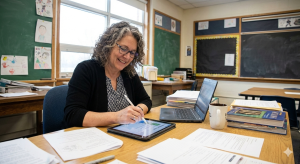
Saving time without losing teaching quality
One of the biggest advantages of AI lesson planning tools is time efficiency. Tasks that used to take hours can often be done in minutes. This allows teachers to focus more on what matters most: teaching, supporting students, and improving classroom interaction.
By using AI wisely, teachers can:
-
Reduce repetitive preparation work
-
Spend more time adapting lessons to real classroom needs
-
Focus on student engagement instead of paperwork
-
Improve work-life balance and reduce burnout
AI doesn’t replace creativity — it frees time for it.
The limits of AI in lesson planning
Despite its benefits, Artificial Intelligence is not a complete solution. AI does not fully understand classroom dynamics, student emotions, or cultural context. That’s where human experience remains essential.
Possible limitations include:
-
Generic lesson ideas that need adaptation
-
Content that may not fully match local curricula
-
Over-reliance on AI reducing teacher originality
-
Risk of using unchecked or inaccurate information
This is why AI should support lesson planning, not control it.
How teachers can use AI responsibly
The most effective approach is to treat AI as a teaching assistant, not a decision-maker.
Good practices include:
-
Using AI for inspiration, not final lesson delivery
-
Reviewing and adapting all AI-generated content
-
Aligning lessons with curriculum standards and student needs
-
Combining AI suggestions with personal teaching experience
When used thoughtfully, AI tools for teachers enhance efficiency while preserving educational quality.
So, can AI really save teachers time?
Yes — when used correctly. AI lesson planning can significantly reduce preparation time, improve organization, and spark new ideas. But the heart of teaching remains human.
Artificial Intelligence helps teachers work smarter, not teach less. The best classrooms of the future will be powered by teachers’ experience, supported by AI technology, working together to create better learning experiences for students.